
Cracking the Shell Game: The Hilarious Hue of Eggs
Why Color Doesn’t Matter + 45 Egg Recipes

The humble egg might be the simplest thing in your kitchen, yet few ingredients spark more aisle-side confusion. You’ve been there: staring at the cartons, wondering if brown means “better,” white means “cheaper,” and blue means “I’m about to overpay at a farmers market.”
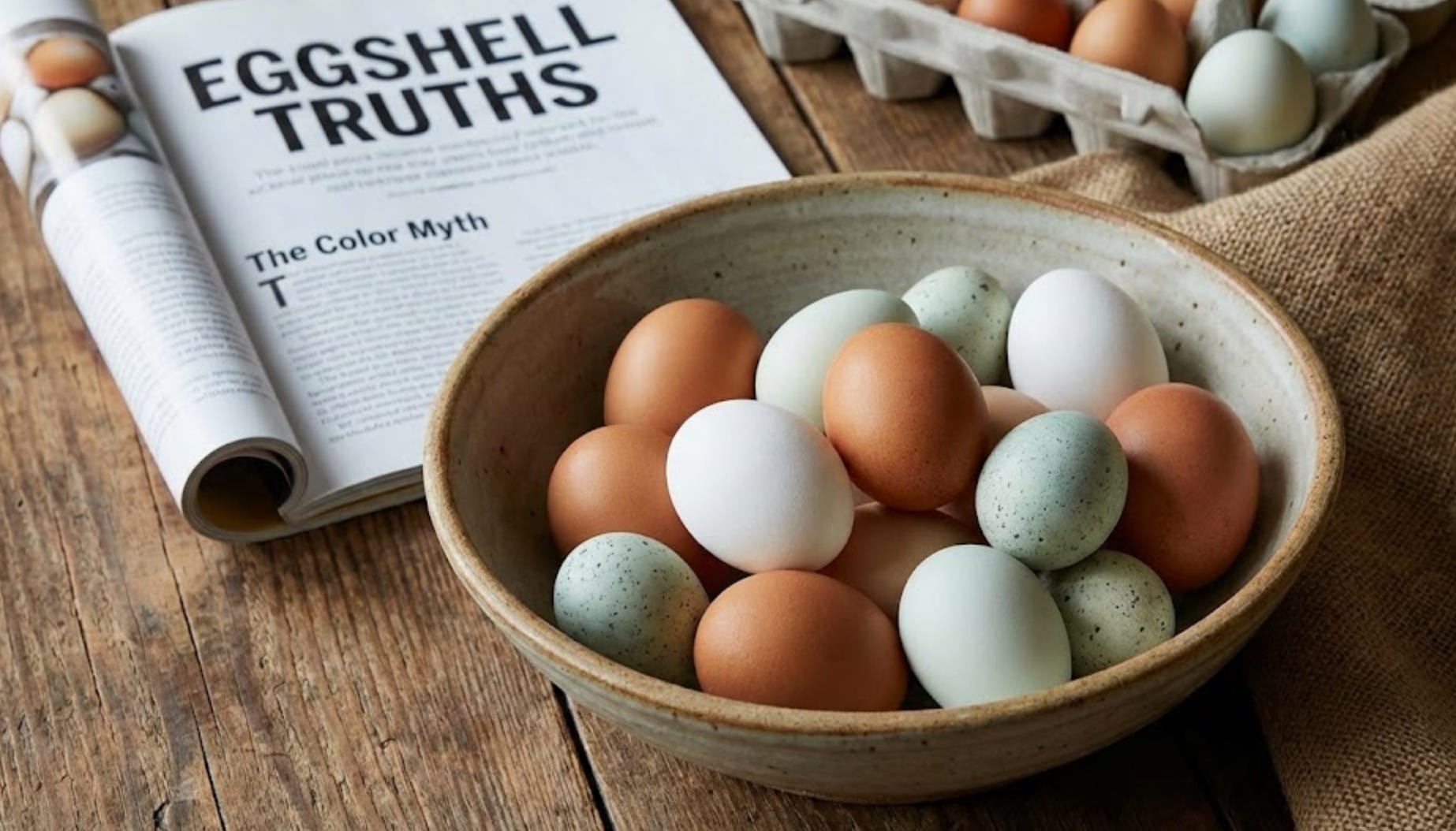
The truth is simple: shell color is about genetics, not nutrition. As long as the hens are raised the same way and eat the same feed, a white egg, a brown egg, and a blue egg are nutritionally the same. The drama is mostly in our heads, not in the carton.
The Color Question
Shell color comes down to breed. White-feathered hens like White Leghorns typically lay white eggs. Reddish birds such as Rhode Island Reds lay brown. Breeds like Araucanas and Ameraucanas lay blue or green eggs thanks to a pigment that’s deposited as the shell forms.
That pigment only touches the shell. It doesn’t change what’s inside. Large reviews and USDA guidance all land on the same point: there is no meaningful nutritional advantage to one shell color over another.
So why the myth that brown is “healthier”? Brown-egg layers are often bigger birds that eat more feed, which pushes up production costs and price. You’re mostly paying for the bird, not a better nutrient profile.
Taste follows the same logic. Shell color doesn’t affect flavor; freshness, diet, and handling do. A fresh white egg from a well-kept hen will taste better than a tired brown egg that’s been sitting in the back of the fridge.
And blue or green eggs? They may look special, but nutritionally they’re in the same league. Claims that they’re dramatically lower in cholesterol or uniquely “super” haven’t held up in research.
Myths We Can Retire
“Brown eggs are healthier.”
Not on their own. Color tells you breed, not nutrient content. Unless you change how the hen lives and what she eats, brown and white eggs are functionally the same food.“Color affects taste.”
In blind tastings, people can’t reliably tell brown from white. What they can pick up is age and diet: fresher eggs and hens with access to better forage tend to give richer flavor and more vivid yolks.“Blue eggs are a nutritional upgrade.”
They look great in an Instagram flat lay, but there’s no solid evidence they’re inherently more nutritious than other eggs from hens raised the same way.
What Does Make an Egg Exceptional
If color’s a red herring, what actually separates an average egg from a great one?
Hen diet and access to the outdoors
When hens are truly pasture-raised, with real access to grass and bugs plus a decent base feed, their eggs often show higher levels of omega-3 fats and certain vitamins (particularly A, E, and D), along with deeper-colored yolks. Multiple controlled studies comparing pastured flocks to standard commercial systems have found these kinds of differences.Specialized feed
Feed enriched with omega-3 sources (like flax or fish oil) can push omega-3 levels up regardless of shell color or label. Same story for other nutrients: tweak the diet, tweak the egg.Farming system and labels
“Organic” mainly speaks to how the feed is grown and what’s not allowed (certain pesticides, synthetic fertilizers, GM crops, routine antibiotics), plus basic access-to-outdoors rules. Some studies suggest organic or higher-welfare systems can shift aspects of the nutrient profile, but the differences are modest and not nearly as dramatic or consistent as the marketing implies.Freshness
Fresh eggs hold their shape better, taste cleaner, and are the real driver in any “this one tasted better” anecdote.
So yes, a fresh white egg from a genuinely pasture-raised flock can absolutely “beat” a brown egg from a cramped indoor system on both taste and certain nutrients. That’s about how the hen lived, not what color ended up on the shell.
Crack the Right Code
Pick whatever shell color you like looking at, but don’t use it as a health proxy. If you care about nutrition and flavor, focus on:
how the hens were raised (pasture access, real outdoor time)
what they were fed (especially if you want higher omega-3s)
and how fresh the eggs are
The best eggs come from the best conditions, not the prettiest shells.

Great read! There is so much confusion surrounding eggs.
Lisa Steele
Author of The Fresh Eggs Daily Cookbook
Thank you! I just saw blue eggs at the grocery store last week and thought, "Now what???"